By DW & Associates
Buying a home in Palm Desert is one of the most rewarding decisions you can make. The desert landscape, warm weather, and vibrant community create a lifestyle that's hard to replicate anywhere else in Southern California. But before you settle in and start enjoying everything that the Coachella Valley has to offer, there's one critical piece of the puzzle you'll want to understand thoroughly: homeowners insurance.
For first-time buyers especially, homeowners insurance can feel like a wall of unfamiliar terms and coverage categories. What exactly does it protect? What does it leave out? How much do you need? These are questions that come up in nearly every transaction, and the answers matter more than most buyers realize until they actually need to file a claim.
This guide walks you through the essentials of homeowners insurance so you can approach your purchase with confidence. Whether you're buying your first home or upgrading to a larger property in the desert, understanding your coverage is part of owning well.
Key Takeaways
- Homeowners insurance typically covers your home's structure, personal belongings, liability, and temporary living expenses if your home becomes uninhabitable due to a covered event.
- Standard policies do not cover every possible event; understanding what falls outside your coverage helps you decide whether additional policies make sense.
- Your lender will likely require homeowners insurance before closing, so it's important to shop for coverage early in the buying process.
- Coverage limits and deductibles directly affect your premium, so knowing how to balance those figures is key to finding the right policy for your situation.
- Homeowners in Palm Desert and the broader Coachella Valley should review their policy details carefully to make sure coverage aligns with local property conditions.
What Standard Homeowners Insurance Actually Covers
Most standard homeowners insurance policies are structured around four core coverage types. Each one protects a different aspect of your home and financial life, so it's worth understanding how they work together before you sign anything.
The first and most fundamental type is dwelling coverage. This protects the physical structure of your home, including the walls, roof, floors, built-in appliances, and attached structures, such as a garage. If a covered event damages or destroys any part of the structure, dwelling coverage helps pay for repairs or rebuilding. When you're choosing a coverage amount, the figure should reflect what it would cost to rebuild your home from the ground up, not necessarily what you paid for it or what it's worth on the open market.
Personal property coverage is the second major component. This protects the contents of your home, including furniture, clothing, electronics, and other belongings, if they're damaged or stolen. Many policies also extend some personal property coverage to items you take with you outside the home, such as a laptop at a coffee shop or luggage during travel. It's worth reviewing the limits carefully, since high-value items like jewelry, art, or collectibles may require additional riders to be fully covered.
The first and most fundamental type is dwelling coverage. This protects the physical structure of your home, including the walls, roof, floors, built-in appliances, and attached structures, such as a garage. If a covered event damages or destroys any part of the structure, dwelling coverage helps pay for repairs or rebuilding. When you're choosing a coverage amount, the figure should reflect what it would cost to rebuild your home from the ground up, not necessarily what you paid for it or what it's worth on the open market.
Personal property coverage is the second major component. This protects the contents of your home, including furniture, clothing, electronics, and other belongings, if they're damaged or stolen. Many policies also extend some personal property coverage to items you take with you outside the home, such as a laptop at a coffee shop or luggage during travel. It's worth reviewing the limits carefully, since high-value items like jewelry, art, or collectibles may require additional riders to be fully covered.
Core Coverage Categories at a Glance
- Dwelling coverage protects the physical structure of your home and any attached structures against covered events.
- Personal property coverage helps replace or repair your belongings if they're damaged, destroyed, or stolen.
- Liability coverage protects you financially if someone is injured on your property and takes legal action against you.
- Additional living expenses (ALE) coverage helps pay for temporary housing and related costs if your home becomes temporarily uninhabitable due to a covered event.
Understanding Liability and Loss-of-Use Protection
Beyond protecting the structure and your belongings, a standard homeowners policy also includes two important types of coverage that often get overlooked until they're needed.
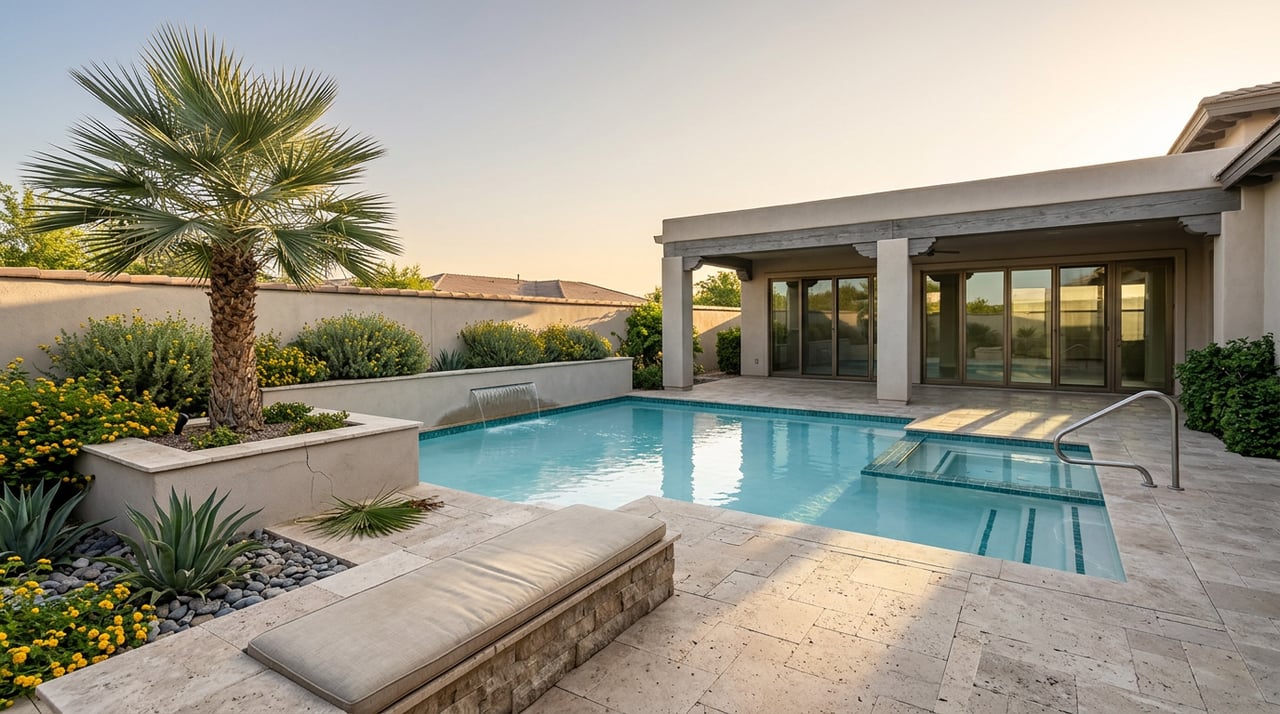
Liability coverage protects you if someone is injured on your property and you're found legally responsible. This could include a guest slipping near the pool, a visitor being injured in the backyard, or even damage your pet causes to someone else's property. Liability coverage helps pay for legal fees, medical bills, and any settlements up to your policy's limit.
Additional living expenses coverage, sometimes called loss-of-use coverage, steps in when a covered event makes your home temporarily unlivable. If you need to stay in a hotel or rent a short-term property while repairs are underway, this coverage reimburses those costs up to the policy limit. For Palm Desert homeowners, this kind of coverage provides meaningful peace of mind knowing that even during an unexpected disruption, you have a financial safety net for temporary housing.
Liability coverage protects you if someone is injured on your property and you're found legally responsible. This could include a guest slipping near the pool, a visitor being injured in the backyard, or even damage your pet causes to someone else's property. Liability coverage helps pay for legal fees, medical bills, and any settlements up to your policy's limit.
Additional living expenses coverage, sometimes called loss-of-use coverage, steps in when a covered event makes your home temporarily unlivable. If you need to stay in a hotel or rent a short-term property while repairs are underway, this coverage reimburses those costs up to the policy limit. For Palm Desert homeowners, this kind of coverage provides meaningful peace of mind knowing that even during an unexpected disruption, you have a financial safety net for temporary housing.
Questions To Ask Your Insurance Provider
- What is my liability coverage limit, and is it high enough given my property and lifestyle?
- Does my ALE coverage include meals, transportation, and other incidental costs, or just lodging?
- Are there caps on how long ALE coverage applies?
- Is my liability coverage extended to incidents that happen off my property?
What Homeowners Insurance Typically Does Not Cover
Standard homeowners insurance does not protect against every possible scenario, and buying a home without knowing the gaps can leave you in a difficult position.
Flood damage is one of the most commonly misunderstood exclusions. Standard homeowners policies do not cover flooding from external water sources. If your property is in a flood zone or near a wash, a separate flood insurance policy is something to consider. In the Coachella Valley, this is a conversation worth having with your insurance agent given the regional terrain.
Earthquake damage is another standard exclusion. California homeowners who want protection against earthquake damage typically need to purchase a separate earthquake insurance policy through the California Earthquake Authority or a private insurer. Given that California sits in an active seismic region, this is a gap in coverage that many buyers eventually address.
Flood damage is one of the most commonly misunderstood exclusions. Standard homeowners policies do not cover flooding from external water sources. If your property is in a flood zone or near a wash, a separate flood insurance policy is something to consider. In the Coachella Valley, this is a conversation worth having with your insurance agent given the regional terrain.
Earthquake damage is another standard exclusion. California homeowners who want protection against earthquake damage typically need to purchase a separate earthquake insurance policy through the California Earthquake Authority or a private insurer. Given that California sits in an active seismic region, this is a gap in coverage that many buyers eventually address.
Common Exclusions To Be Aware Of
- Flood damage from external water sources is not covered under a standard homeowners policy and requires separate flood insurance.
- Earthquake damage requires its own policy, which California homeowners can obtain through the California Earthquake Authority or a private carrier.
- Normal wear and tear, maintenance issues, and gradual deterioration are not covered; insurance is designed for sudden, unexpected events.
- Pest infestations, including termites or rodents, are considered maintenance issues and are typically excluded.
- High-value personal items, such as fine jewelry, art, or rare collectibles, may require scheduled endorsements to be fully insured.
How Coverage Limits and Deductibles Work
One of the most practical steps you can take before finalizing a homeowners insurance policy is to understand how coverage limits and deductibles interact, since both directly affect your premium and your out-of-pocket costs in the event of a claim.
Your coverage limit is the maximum amount your insurer will pay for a covered loss. For dwelling coverage, this should reflect the full replacement cost of your home. Replacement cost value (RCV) is generally preferred over actual cash value (ACV), because RCV covers what it costs to rebuild or replace something at today's prices, while ACV factors in depreciation. The difference matters most when you're dealing with older components like a roof or appliances.
Your deductible is the amount you pay out of pocket before your insurance kicks in. A higher deductible typically results in a lower monthly premium, while a lower deductible means more predictable costs if something goes wrong but higher ongoing premiums. Finding the right balance depends on your financial situation and how much liquidity you'd have available in an emergency.
Your coverage limit is the maximum amount your insurer will pay for a covered loss. For dwelling coverage, this should reflect the full replacement cost of your home. Replacement cost value (RCV) is generally preferred over actual cash value (ACV), because RCV covers what it costs to rebuild or replace something at today's prices, while ACV factors in depreciation. The difference matters most when you're dealing with older components like a roof or appliances.
Your deductible is the amount you pay out of pocket before your insurance kicks in. A higher deductible typically results in a lower monthly premium, while a lower deductible means more predictable costs if something goes wrong but higher ongoing premiums. Finding the right balance depends on your financial situation and how much liquidity you'd have available in an emergency.
Key Terms To Know Before You Buy
- Replacement cost value (RCV) covers what it costs to rebuild or replace at current prices, without factoring in depreciation.
- Actual cash value (ACV) pays out the depreciated value of damaged property, which may leave a gap in coverage.
- Premium is your regular payment for keeping the policy active, typically paid monthly or annually.
- Deductible is the out-of-pocket amount you pay before coverage applies to a claim.
- Endorsement or rider refers to an add-on to your base policy that covers specific items or events not included in standard coverage.
FAQs
Is Homeowners Insurance Required When Buying a Home?
If you're financing your purchase with a mortgage, your lender will almost certainly require you to carry homeowners insurance as a condition of the loan. The lender has a financial stake in the property, so they want to make sure it's protected. Even if you're purchasing with cash, carrying insurance is still a wise decision to protect your investment.
Can I Bundle Homeowners and Auto Insurance?
Yes, and doing so often results in a meaningful discount from many insurers. Bundling policies with a single carrier simplifies your coverage management and can reduce your overall premium cost. It's worth requesting quotes both separately and bundled to compare.
When Should I Shop for Homeowners Insurance?
Start shopping for homeowners insurance as soon as you have a signed purchase agreement. Most lenders will ask for proof of insurance before closing, and in some cases, you'll need a binder in place before the final walkthrough. Giving yourself two to three weeks to compare quotes and review coverage details takes the pressure off.
The Right Coverage Makes All the Difference
Homeowners insurance is one of those things that fades into the background when everything is going well but becomes critically important the moment something unexpected happens. Taking the time to understand your coverage before closing, rather than after, puts you in a far better position as a new homeowner.
Our team at DW & Associates is here to help you navigate every part of the home-buying process, including the conversations that happen before the keys are in your hand. If you have questions about what to look for in a homeowners policy, or if you're ready to start your search for the right home in Palm Desert, reach out to us today.
Our team at DW & Associates is here to help you navigate every part of the home-buying process, including the conversations that happen before the keys are in your hand. If you have questions about what to look for in a homeowners policy, or if you're ready to start your search for the right home in Palm Desert, reach out to us today.